- Significance of Chinese migration in the region
- History of Chinese society in Thailand
- Chinese society in Singapore
- Chinatowns in Southeast Asia
Significance of Chinese migration in the region
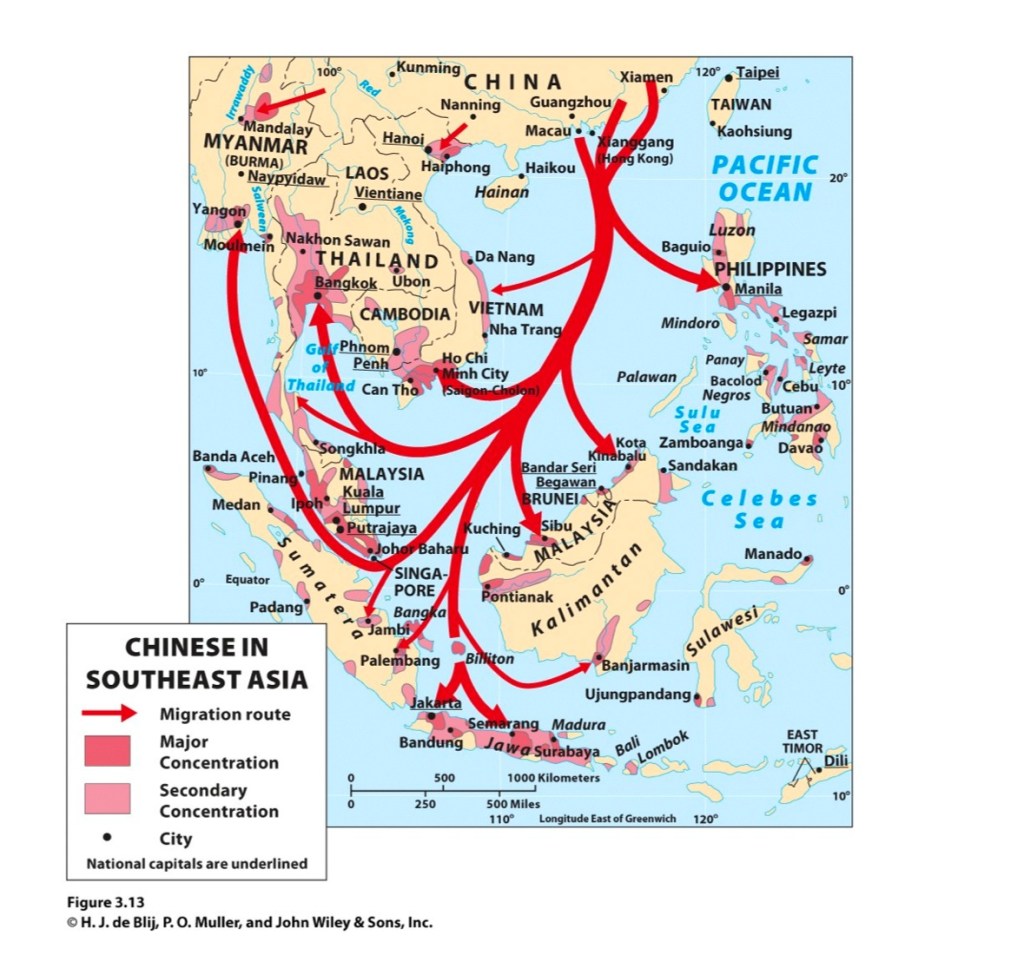
the picture above indicates Chinese migration, mainly from Guangdong province to South East Asian countries such as Thailand, Vietnam and Indonesia.
⇩ The Chinese in Southeast Asia ; population and economic scale in each countries
| Population (%) | Control of economy (%) | |
| Burma / Myanmar | 3.4 | – |
| Cambodia | 4.0 | – |
| Indonesia | 3.8 | 73 |
| Laos | 0.2 | – |
| Malaysia | 28 | 69 |
| Philippines | 1.3 | 50 – 60 |
| Singapore | 77 | 81 |
| Thailand | 10 | 81 |
| Vietnam | 1.4 | – |
We can see high level of economical engagement by Chinese people in those nations. Especially in Indonesia, the population of Chinese only accounts for 3.8% but 73% of the domestic economy is run by ethnic Chinese people.
History of Chinese society in Thailand

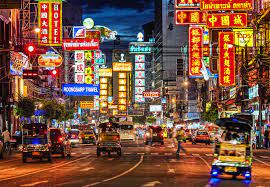
This is a Chinatown in Bangkok along Yaowarat road. It is hard to tell that this place is in Thailand and hard to believe that it is not in China.
In Thailand, Chinese are the largest minority group in the country and the largest overseas chinese community in the world with a population of approximately 7-10 million people, accounting for 11-14% of the total population in the country.
( Early history )
traders from China first began arriving in Ayutthaya in 1360 to 1767. King Taksin ruled Thailand and encouraged more Chinese immigration and trade with Chinese settlers coming to Siam in large numbers.
They migrated to Thailand in search of employment opportunities due to recession in China during this period. Most of Chinese migrants were male and mostly married with local Thai Female.
( 19th century )
Thai Chinese were disliked by locals due to ;
① Haw Wars ( 1865 – 1890 )
② the rise of European economic influence saw many Chinese shift to opium trafficking and tax collection
( 20th century )
13,000 to 34,000 Chinese entering the country from southern China into Thailand between 1882 to 1917 , mostly settled in Bangkok. Majority of them engaged in skilled jobs or entrepreneurship – based – roles, Whereas Thai people mainly engaged in rise production.
Although Chinese migrants brought new farming ideas and methods for rubber plantations to help the domestic economy, they were not welcomed by local Thai people. In the 20th century, King Rama required the adoption of Thai surnames by migrants in the 20th century. In 1932, the Thai language became compulsory education and heavy taxes on Chinese owned businesses.
( Chinese influence in the economy )
- CP group ( Charoen Pokphand group )
This is the largest conglomerate in Thailand that mainly operate food, retail and agricultural industries.
Charoen Pokphand conglomerate originates from Shantou, China when immigrant brothers Chia Ek Chor and Chia Jin Hyang started a seed store on Songsawat Road in Bangkok’s Chinatown back to 1921.
⇒ This shows that Chinese migrants are influential in destination countries, both culturally and economically.
Chinese society in Singapore
Singapore is a Southeast Asian country locating off the southern tip of Malay Peninsula. The city state is 710 km² and inhabited by five million people from Three major communities ; Chinese, Malay and Indian.

Chinese : 74.3% ( majority )
Malay : 13.5%
Indian : 9%
Singapore became the capital of the British Straits Settlements in 1832. It became a popular destination for both Chinese and Indian traders as they were attracted to the region by free trade policies, thus Singapore became an entry and dispersal point for large numbers of Chinese and Indian migrants coming to work in the plantations and mines of the Straits Settlements.
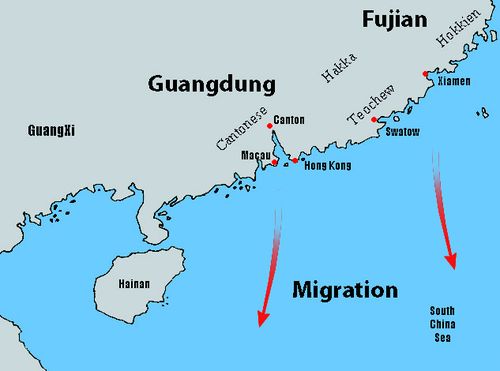
Majority of Chinese migrants originate from Macau, Guangdong, and Fujian.
Ethnic Chinese people in Singapore mainly speak Mandarin and Cantonese.
Currently, English is the lingua franca in Singapore and is used as a medium of conversation between different ethnic groups.
Singapore English has distinctive accents, often referred to as “Singlish”.
| to parents | to spouse | to siblings | to grandparents | |
| (language) | 1980 1990 | 1980 1990 | 1980 1990 | 1980 1990 |
| English | 6.2 12.2 | 12.7 19.5 | 14.7 22.0 | 2.0 4.7 |
| Mandarin | 5.7 22.0 | 9.7 21.8 | 9.5 26.6 | 1.1 11.4 |
| Chinese Dialects | 66.9 46.9 | 58.0 40.5 | 55.6 33.9 | 79.7 63.3 |
The table shows that English, along with Mandarin, is growing in popularity among all residents of Singapore. However, the Chinese dialect, while still dominant in Singapore, is gradually losing its importance among the Chinese community.
Singapore government actively discourages the use of Singlish among the population, in order to let Singaporeans to be able to communicate effectively with the wider English-speaking population in the world. Also the government has banned Singlish on radio, TV and other medias. Singlish was blamed for causing English standards to fall in Singapore. The Senior Minister Lee Kuan Yew said “Singlish is a handicap we must not wish on Singaporeans” during his speech in Pagar constituency’s National Day celebration.
How do Singaporeans define their identity?
There is a survey on Singaporean identity conducted by Yuki Yokohama. According to Yuki Yokohama’s survey, the Chinese population in Singapore accounts for more than 70% of the total population, and many of them consider themselves Singaporeans or Singaporean-Chinese, not Chinese. Some of them define Singaporeans by the commonalities of Singapore’s Singlish way of speaking and its multi-ethnic society.
Singapore has in recent years opened its doors to Western countries for business and trade purposes. The government is concerned that the lifestyle and culture of Singaporeans is becoming Westernized. This is not desirable, as the government wants Singapore to remain an Asian nation, one that is grounded in Asian culture, especially Chinese culture. To this end, the government has initiated bilingual education in English and one’s native language, the Speak Mandarin Campaign, which began in 1979 to encourage people to speak Mandarin rather than dialects of their native language, Chinese. The campaign aims to break down language barriers between each other and strengthen the unity of Singaporeans.
Chinatowns in Southeast Asia
Singapore ( 牛車水 )
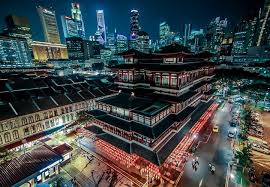
Bangkok, Thailand ( Yaowarat Road )
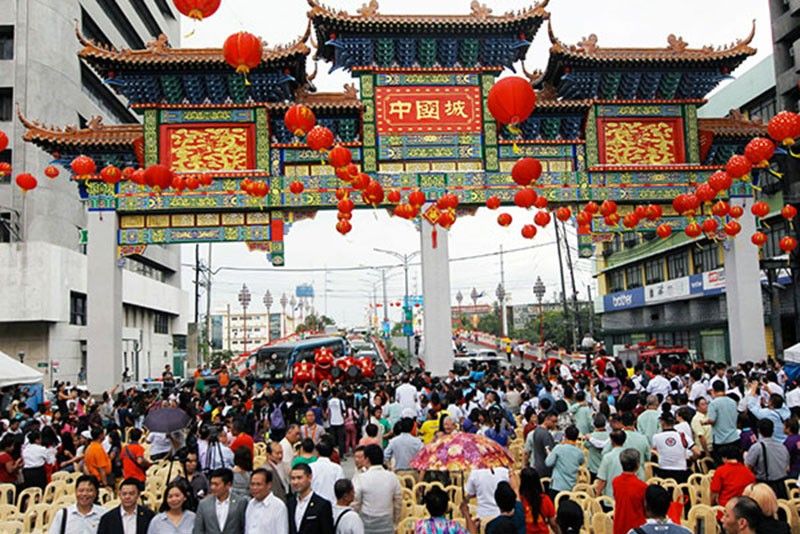
Manila, Philippine ( Binondo,岷倫洛 )
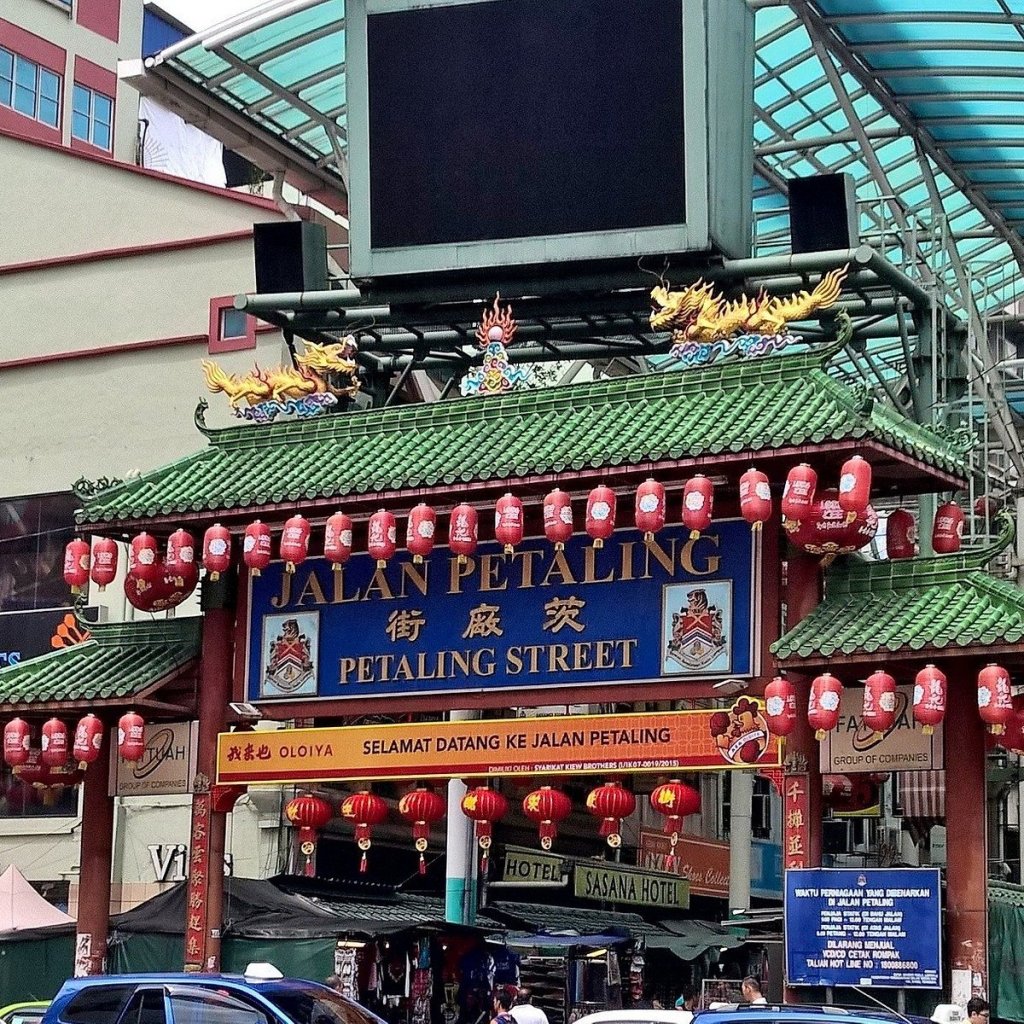
KL, Malaysia ( Petaling street, 茨厂街 )
Reference
Laurence J.C. Ma and Carolyn Cartier. 2003. The Chinese Diaspora – Space, Place, Mobility, and Identity
Yuki Yokohama. 2021. A Study on the Identity of Chinese Singaporean
My Chinaroots.com/places/651647/Thailand
 toshi blog
コメントを残す