Chinese diaspora in Japan
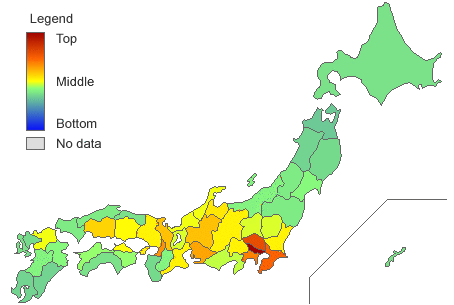
This shows the distribution of Chinese diaspora in Japan. They are found predominantly in the Greater Tokyo area, which includes Tokyo, Saitama, and Chiba prefectures.
There are also many Chinese diaspora in the Greater Osaka area, which includes Osaka, Kyoto, and Hyogo prefectures.
This graph shows that Chinese diasporas locate in many cities throughout Japan.
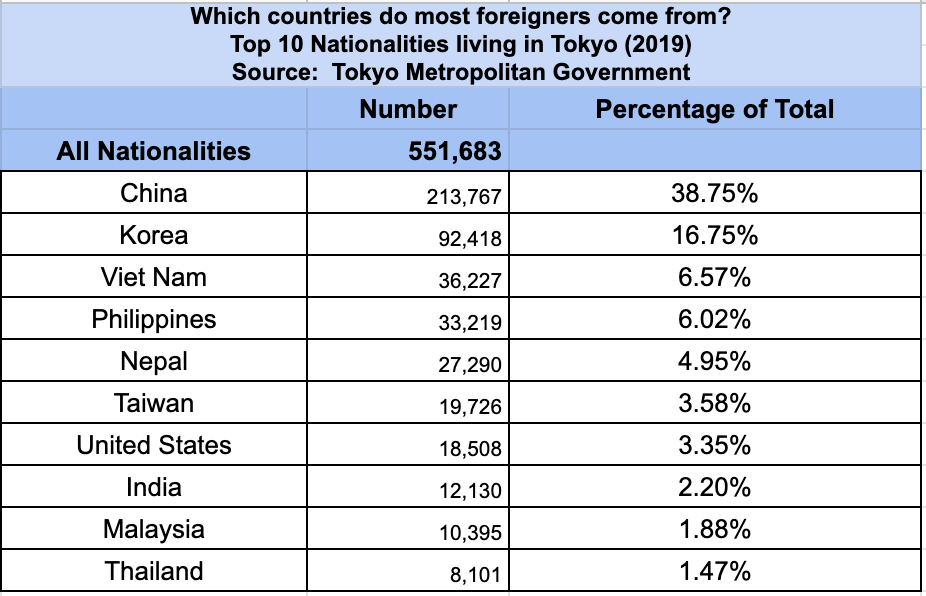
Chinatowns In Japan
Yokohama Chinatown
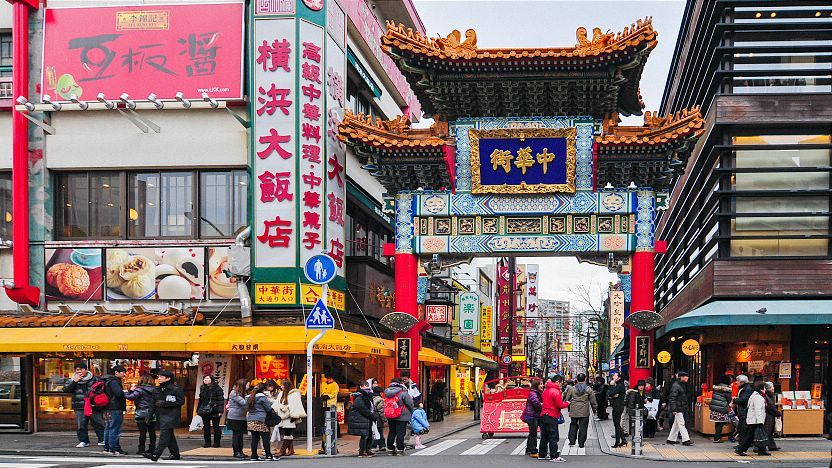
This is the largest Chinatown in Japan with a lot of Chinese restaurants, Cafes and other cultural facilities such as Guantian temple. Various events such as Chinese New Year around the beginning of February are also held in the Chinatown.
Yokohama Chinatown quickly developed, after the port of Yokohama had been one of the first Japanese ports to be opened to foreign trade in 1859. It became the residence of the many Chinese traders who settled down in the city.
Kobe Chinatown
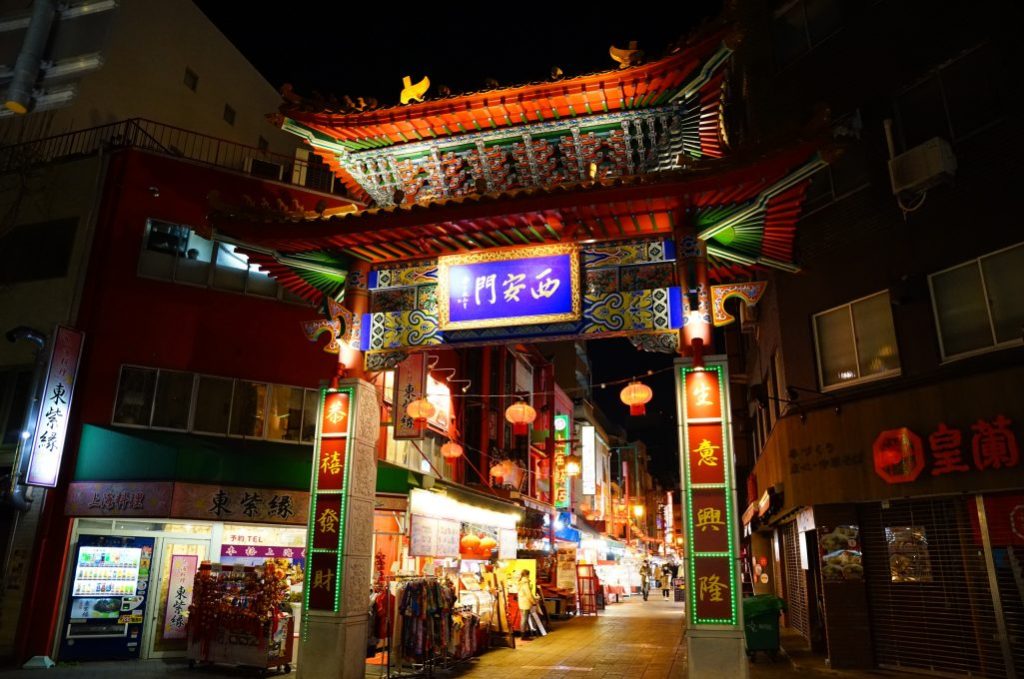
Nankinmachi (南京町) is a compact Chinatown in central Kobe. This is the center of a Chinese community in Kansai area. The area was developed by Chinese merchants who settled near Kobe Port after the port was opened to foreign trade in 1868. As the Chinatown developed, it became known as Nankinmachi after Nanjing, the former capital of China.
Nagasaki Chinatown
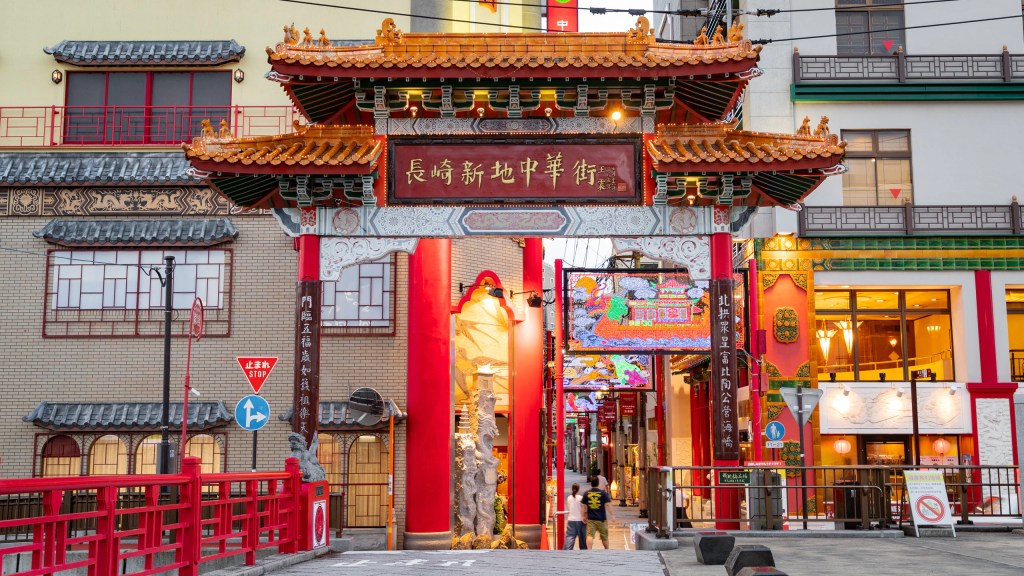
This is the oldest Chinatown in Japan and home to a variety of Chinese restaurants and shops. Nagasaki was the only port open to trade during Japan’s era of isolation, and Chinese were the only traders allowed to conduct business alongside the Dutch. This Chinatown was initially an island but it is no longer due to further reclamation.
Chinatown is the center of Nagasaki Lantern Festival during during the Chinese new year, popular with a thousand of lanterns illuminate the city.
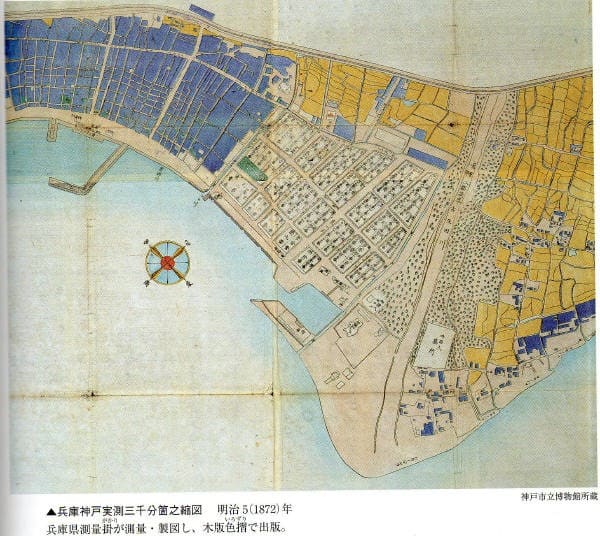
How Nanjing town (Kobe Chinatown) was formed
Early history
It was not until 1868, when the port of Kobe was opened for foreign trade, that immigrants and merchants from Western countries such as England, France, Germany, the Netherlands, and the United States settled in the foreign settlement in Kobe.
Since these countries had already signed treaties of amity with Japan, traders and immigrants from them were allowed to settle in the foreign settlement built by the Japanese government. However, because China did not have a treaty of amity with Japan at the time of the opening of the port, Chinese traders and immigrants were not allowed to settle in the foreign settlement, but instead settled in the mixed residential area located to the west of the foreign settlement.
This blue and yellow regions are mixed residential areas and the foreign settlement is surrounded by them. At the time, the mixed residential area was not well drained. It was not a comfortable place to live and operate businesses.
Majority of immigrants from China originate from Guangdong and Fujian provinces. A lot of them also came from the city of Nanking (南京市), hence the neighborhood “Nankinmachi”. At this time, overseas Chinese were mainly engaged in the painting, laundry and food service industries.
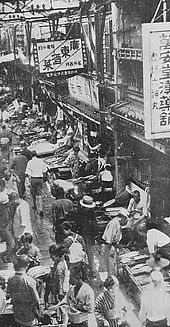
→ This is the Kobe Chinatown in 1930s. Nankinmachi was a gathering place for overseas Chinese merchants, but rather than being a closed Chinatown, it was a space open to the outside world where Chinese and Japanese people got along and did business side by side. Although there was already a mix of Japanese and Chinese stores at that time, it is clear that the number of Japanese stores was considerably larger. Japanese stores sold a variety of items, including butcher shops, tofu shops, fish shops, and tatami mat shops, but they were not stores selling Chinese products. In contrast, he Chinese mainly operated Chinese restaurants, barbershops, general stores, and Chinese medicine stores.
Nankinmachi specialized in morning markets, and the crowds peaked around 9:00 a.m. In particular, many perishable goods were sold, including snappers, river fish, and shellfish. Other items for sale included Shaoxing wine, ginseng, candles and firecrackers. The market was filled with a variety of goods not available elsewhere.
After WW2
The Kobe Air Raid completely destroyed the city of Kobe, killing 460,000 people. Nanking Town was completely lost.
The Chinese had nothing to eat and nothing to sell in the market.
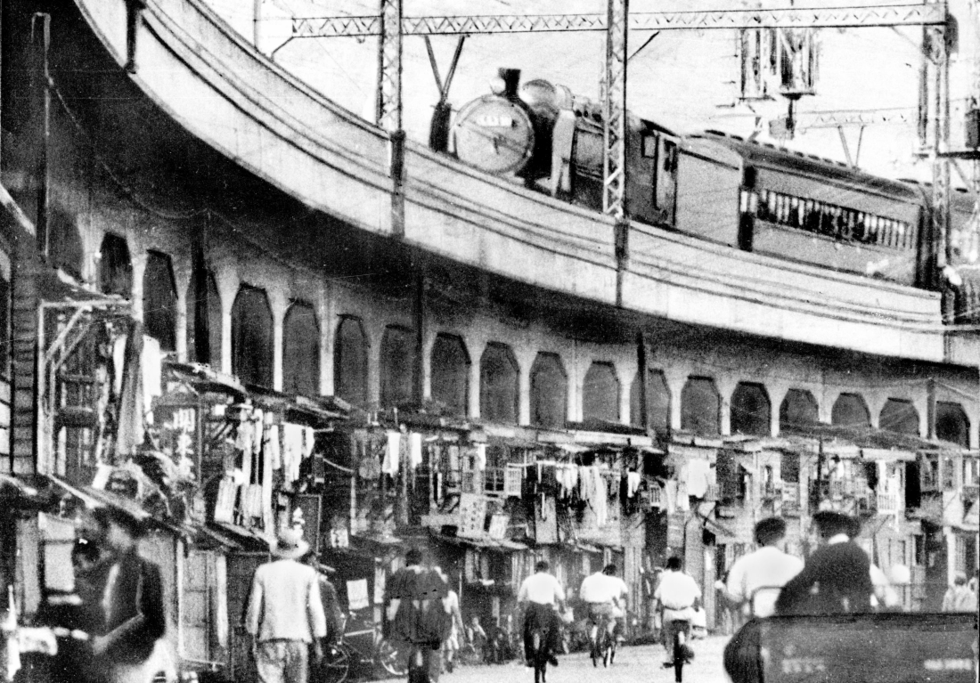
The postwar black market is said to have started when Chinese people began selling fried buns for 5 yen, and a variety of goods, including clothing and food, were distributed. At this time, Nankinmachi, too, had turned into a black market, but eventually the number of temporary stores with food stalls increased, and the number of Chinese restaurants also grew to about eight.
development of Chinatown by the government
In 1982, a landscape improvement project was initiated. Since then, the streetscape and landscape of Nankinmachi have been created, emphasizing the Chinese image. After the war, the number of foreign sailors and foreign bars increased in areas around Nankinmachi. This gave the town a dangerous impression and people began to stay away. As a result, the number of Chinese restaurants and stores decreased. In 1977, before Chinatown was developed, there was only one Chinese restaurant in town. There were many Japanese-owned cafes and bars, but the scenery and atmosphere of Chinatown was lost. The plan primarily involved the construction of China Gate, Promenade, and China Plaza (a small park in the center of Nankinmachi).

⇒ This is China plaza in Kobe Chinatown.
One major difference between Nanjing Town and overseas Chinatowns is that facilities such as the Guantian Temple and the Zhonghua Yizhuang are separated from Nanjing Town by distance. In the case of San Francisco’s Chinatown, all facilities necessary for daily life, such as Chinese hospitals, dental clinics, Chinese restaurants and general stores, are located within Chinatown. Historically, Chinese immigrants who came to the U.S. as laborers were forced to live in Chinatown to protect themselves from extreme racism, and this is the defensive aspect of the area. Therefore, there is no grassroots friendship like in Nankinmachi, where Japanese and overseas Chinese want to do business side by side, and in most cases, no whites or blacks are allowed to operate within Chinatown. This shows that the overseas Chinese in Kobe are well integrated into the local Japanese community.
Since the opening of the port, the city of Kobe has been able to overcome many hardships, including the Kobe Air Raids and the Great Hanshin-Awaji Earthquake, thanks to the good relationship between Japanese and overseas Chinese merchants. After the earthquake, when all the food in Nankinmachi was cold, Japanese and overseas Chinese worked together to set up about 10 stalls in Nankinmachi Square and distributed about 18,000 dumplings as well as Shaoxing wine for free, a heartwarming episode that encouraged the citizens. At the citizen’s level, mutual support and cooperation without any distinction between Japanese and overseas Chinese were seen everywhere after the earthquake.
Nankinmachi is not a closed Chinatown, but an open Chinatown. It has a history of strong ties between the local Japanese and Chinese people, who do not distinguish between each other. It differs from overseas Chinatowns in that overseas Chinese were forced to live in Chinatowns to protect themselves from racial discrimination by the locals. The strong ties between these two different ethnic groups were essential to the formation of this Chinatown.
Reference
呉 宏明/高橋 晋一【編著】. 2015. 南京町と神戸華僑
 toshi blog
コメントを残す