Scaffolding made of Bamboo
- Scaffolding in Hong Kong
This kind of scene can be seen throughout Hong Kong. Scaffolding for all construction sites, from low-rise buildings to high-rise office buildings, is made of bamboo. When I first saw them, I remember worrying about their safety because they looked unstable.
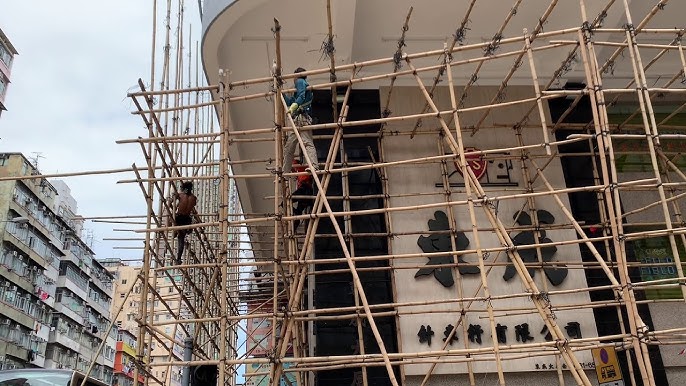
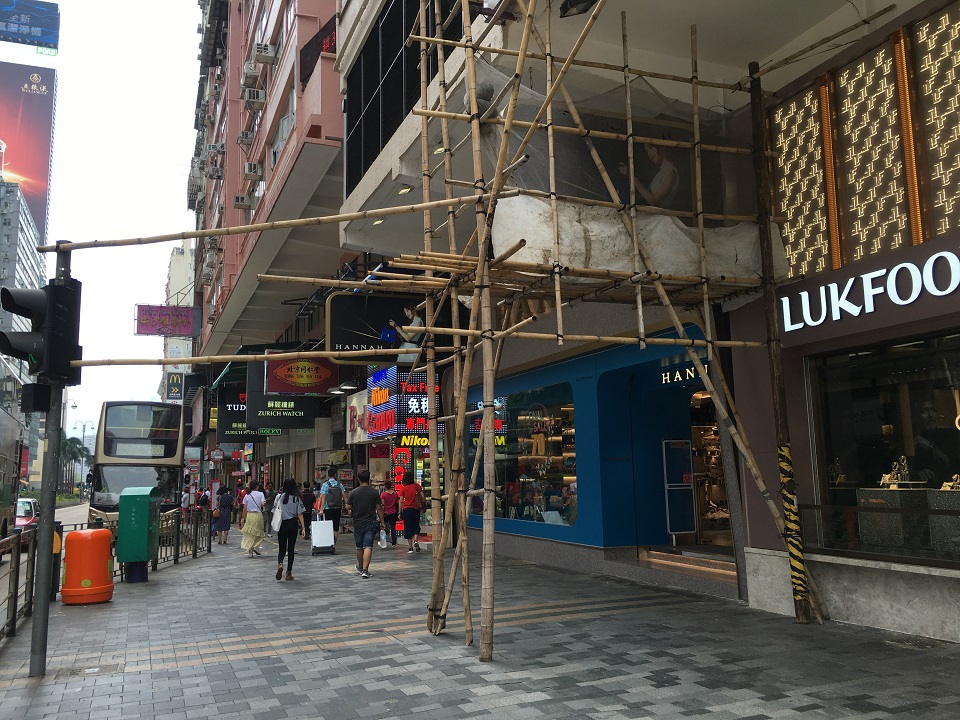
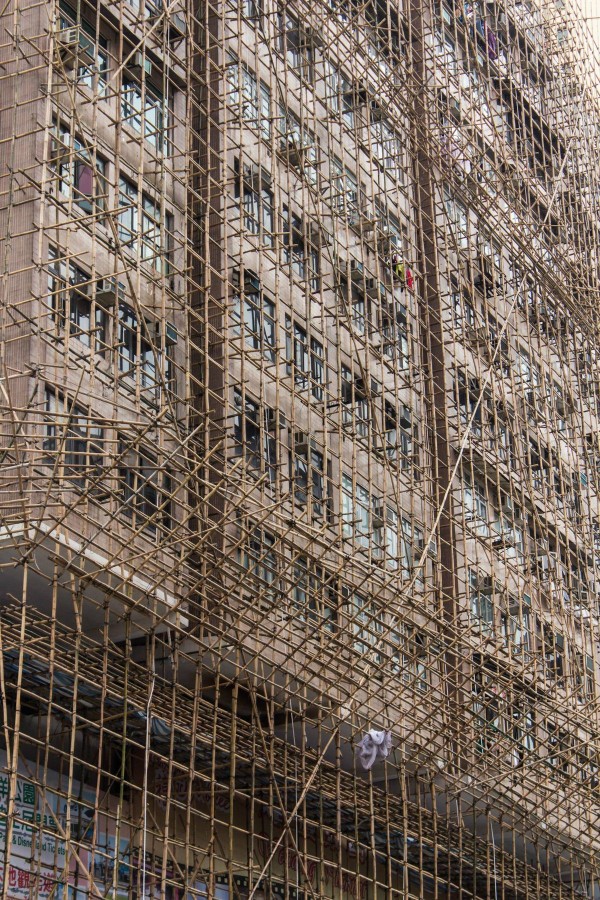
( Why they Use bamboos rather than metal pipes? )
- Bamboo is much cheaper than metal pipes. In Hong Kong, metal pipes cost five times as much as the same length of bamboo.
- Bamboo is lightweight, so it is easy to transport, assemble, and disassemble.
- the hot and humid Hong Kong, humidity is often in the 80-90% range. When steel scaffolding is built in such a Hong Kong, the humidity can cause the steel to rust.
- Tall buildings require steel to be built high, and as a result, the scaffolding may not be able to support the weight of the steel. This is a fatal drawback of metal pipes because Hong Kong has to build a lot of high-rise buildings.
Such scaffolding made entirely of bamboo is hard to find in Japan, and it is no exaggeration to say that Hong Kong, known for its million-dollar night view, is a city made of bamboo. This may be one of the cultural aspects of Hong Kong.
High dense residential buildings in Hong Kong
- Monster Building
This building is know as “Monster building”, made up of 5 different buildings on Kings road, Quarry Bay in Hong Kong. The lower floors are used as stores and the upper floors as residences . The entire Monster condominium has 2,243 residential units. During the 1940s and 1950s, the establishment of the People’s Republic of China on the mainland and the outbreak of the Korean War led to a huge influx of population into British Hong Kong. The shortage of both housing and commercial facilities led to the construction of the “Commercial and Residential Mixed Tang Loh”. Construction of this group of high-rise buildings, commonly referred to as the “Monster Apartments,” began in the 1960s . It was originally named “Baekjia Xinmun” (百嘉新邨) . The construction was halted when the developer disappeared, and construction was finally completed in 1972.
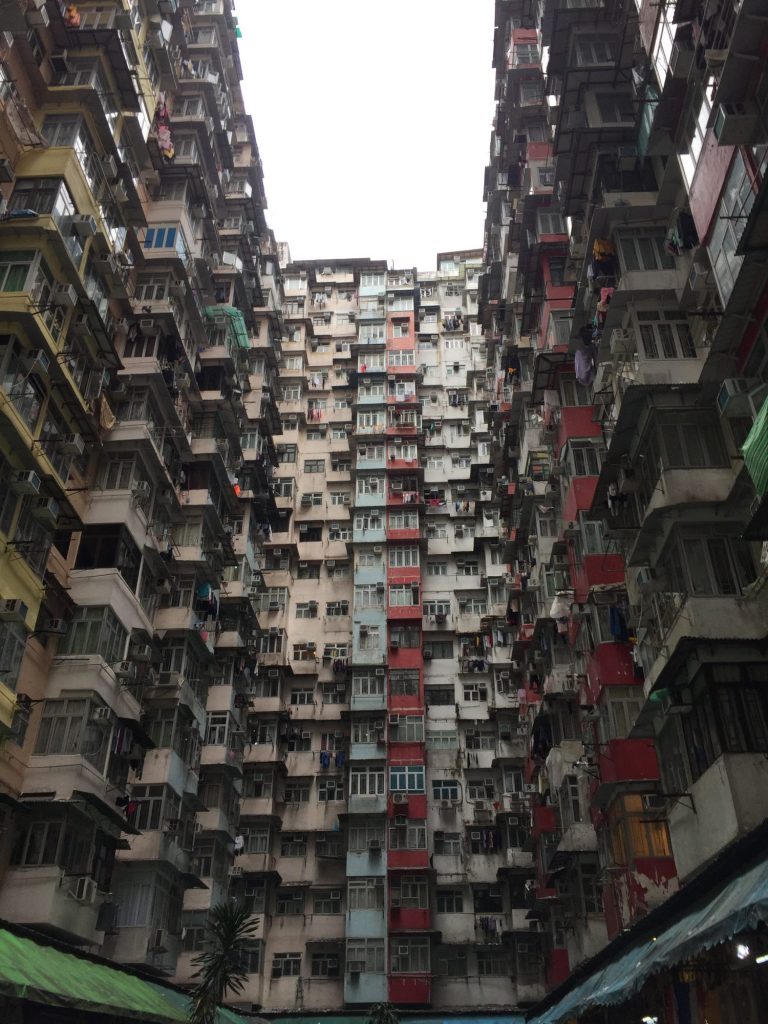
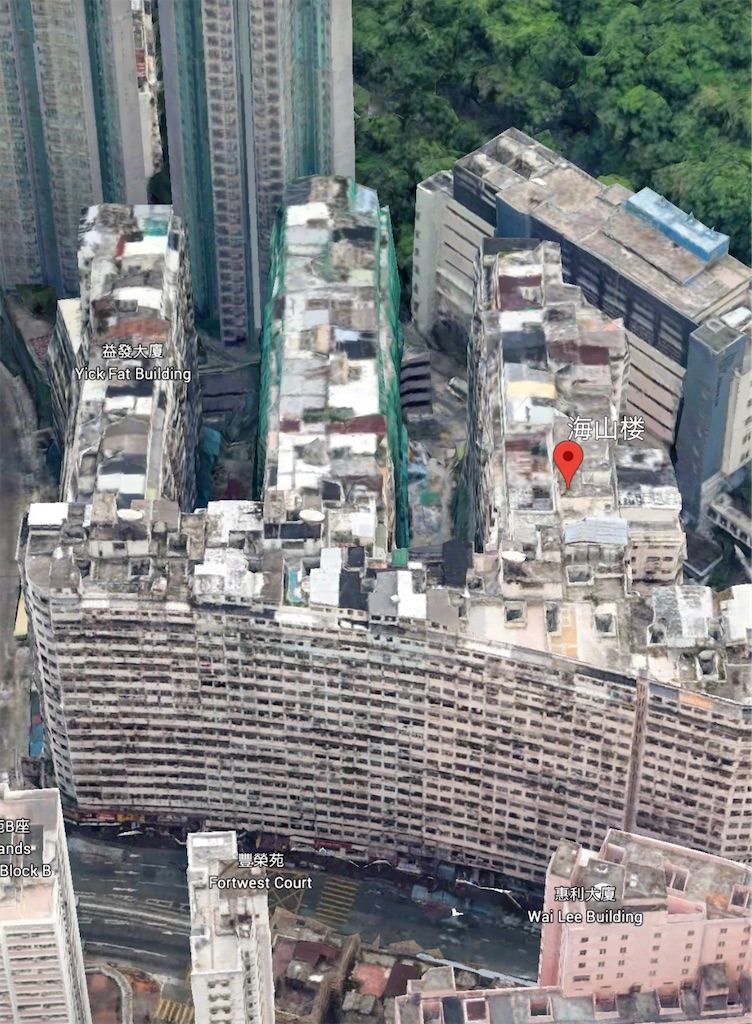
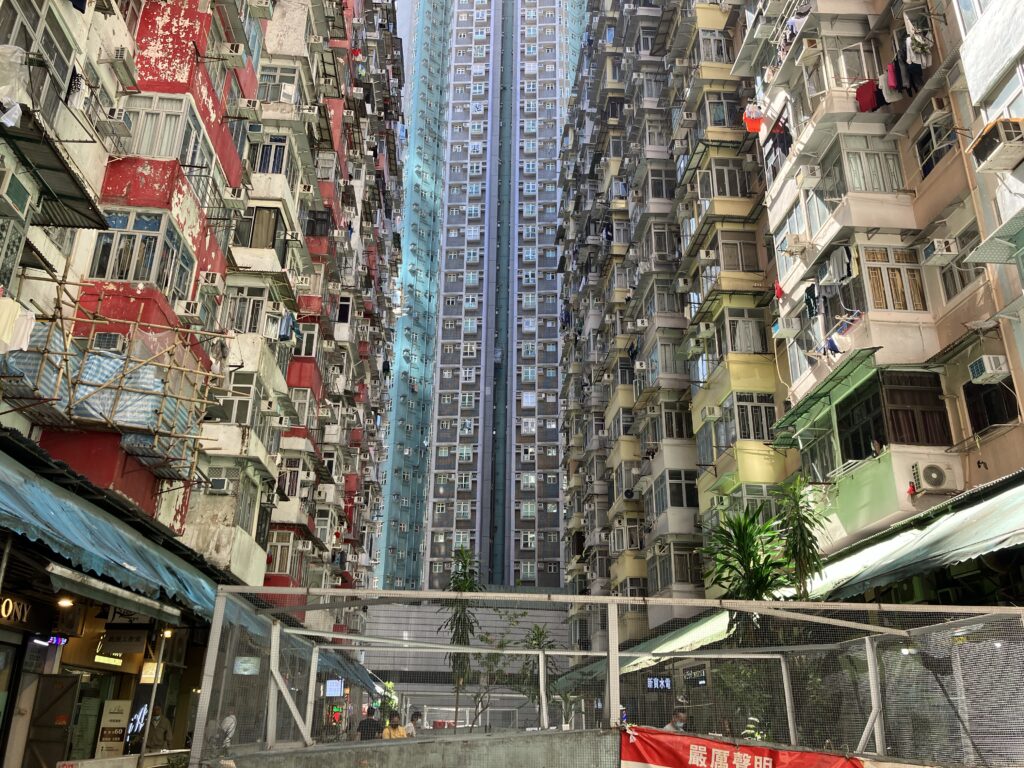
The “Monster Mansion,” which became famous, attracted many tourists from Hong Kong and abroad in search of photogenic views, and they waited their turn in the courtyard to take pictures. Residents began to see this as a problem, and the management association took measures to prohibit unauthorized photography.
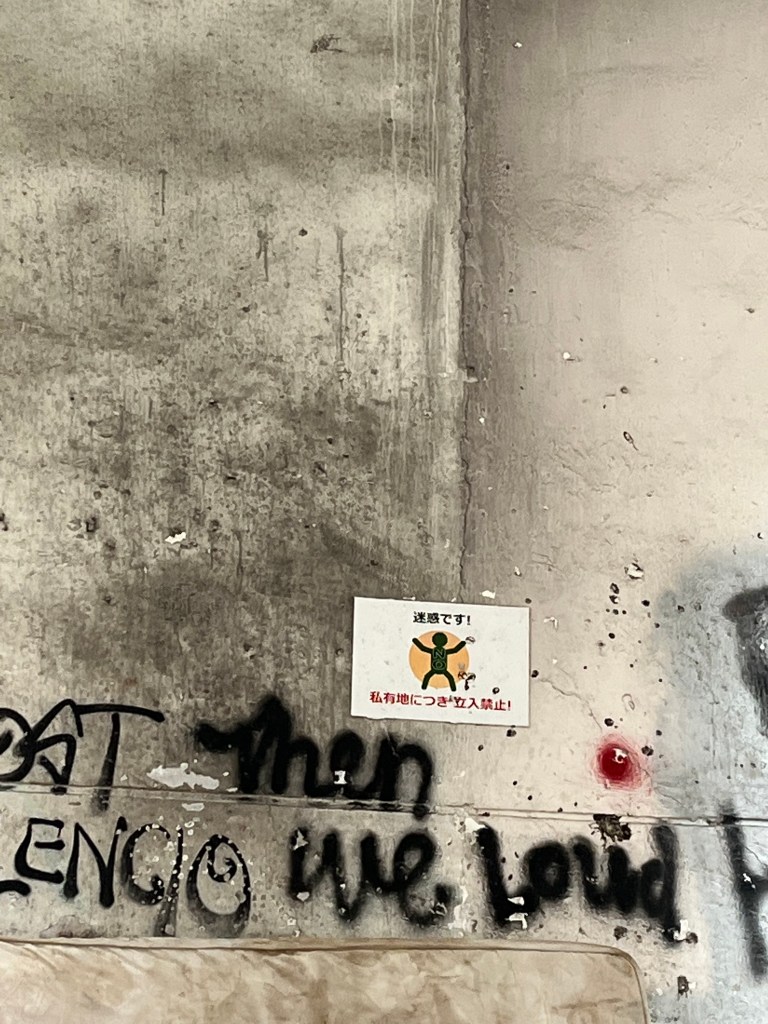
これは、モンスタービル内にある中庭の入り口に貼られていました。香港にある建物に、日本語で注意書きがされていたということは、この建物がかなり日本人観光客に人気だったことがわかります。私が香港を訪れた時には、もうすでに立ち入り禁止になっていたので、かなり落ち込みました(笑)。このような景観を残している建物も、香港ではかなり少なくなっているらしく、外側から見られただけでも価値があると思います。現在では、あの有名な九龍城塞は取り壊されているの、その姿を見ることはできませんが、少しでもその面影を感じたいという方には、おすすめのスポットです。
This was posted at the entrance to the courtyard inside the Monster Building. The fact that a warning sign was posted in Japanese on a building in Hong Kong suggests that this building must have been quite popular with Japanese tourists. When I visited Hong Kong, it was already off-limits and I was quite depressed . With the number of buildings in Hong Kong that have retained this type of landscape in decline, it was worth it just to be able to see it from the outside. The famous Kowloon Walled city has now been demolished and cannot be seen, but I would recommend this place to anyone who wants to feel even a glimpse of it.
香港のネオンサイン事情 ( street signs in HK )
香港経済は60〜80年代に急速に成長し、同時に、霓虹燈招牌(ネオンサイン)の数も増え始め、80〜90年代に最も多くなる。背景には、経済発展に伴う市民の消費力向上で、いかに多くの人々に注目され、顧客となってもらうかが、企業や店舗には重要課題でした。2010年より建築法等の改正により、大型看板や霓虹燈招牌の高さや大きさが制限されたため、多くの看板が撤去された。要するに、制限の範囲に収まっていなかったということです。中には、地区のランドマークのような存在であったものも撤去されました。惜しむ声も多いが、決まりごとは守っていただくしかない。これにより、2020年までに、すでに9割の霓虹燈招牌が撤去されました。また、オンラインショップに移行する実店舗も多く、単純に看板の価値が下がったことも、減少の理由の一つです。膨大な維持費を必要とする看板の広告宣伝媒体としての価値がなくなれば、撤去するのも理に適うわけです。
<娯楽施設>バー、ホテル/モーテル、雀荘、風俗店、ビリヤード場など
<商業施設>衣料品店、電気店、ショッピングセンターなど
<飲食店>茶餐廳、レストランなど
<その他>中医薬店、質屋など
私自身、一番よく目にしたのは、風俗や雀荘関係の看板でした。
⇩1980s and now
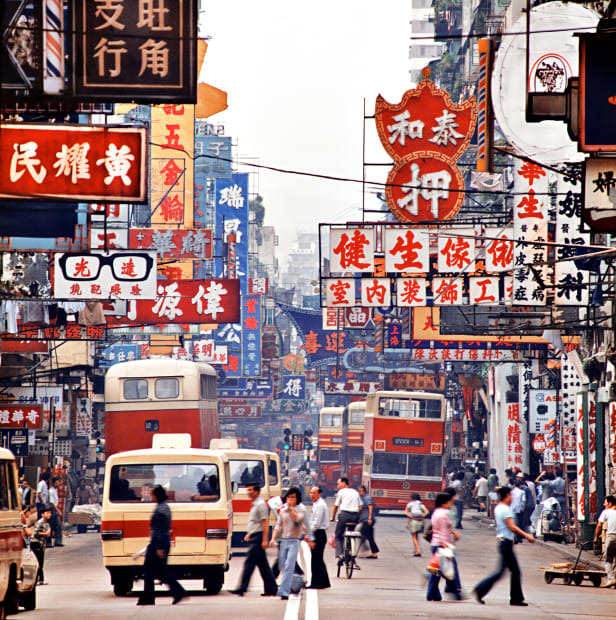
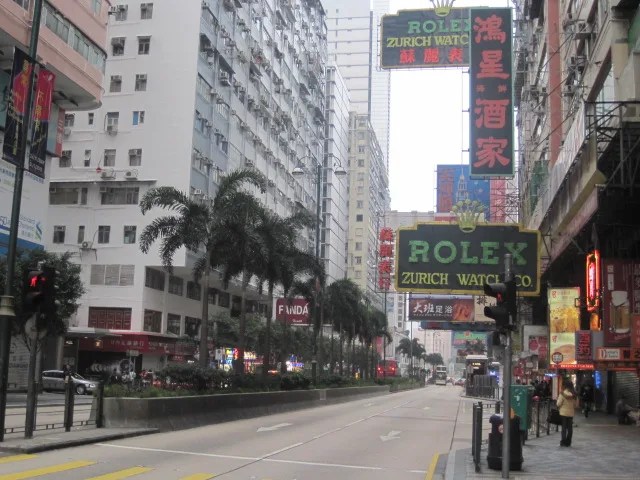
Hong Kong’s economy grew rapidly in the 60s and 80s, and at the same time, the number of justiciable light invitations (neon signs) began to increase, reaching its highest number in the 80s and 90s. In the background, with the increase in the consumption power of the citizens due to the economic development, it was an important issue for businesses and stores how to attract more people’s attention and customers. 2010 saw the amendment of the Building Law, etc., which restricted the height and size of large signs and justiciable light beckoning tiles, and many signs were removed. In short, they did not fit within the limits. Some of them, which had been landmarks of the district, were also removed. Although many are regretted, we have no choice but to ask that the rules be adhered to. As a result, 90% of the justiciable light invitations have already been removed by 2020. Another reason for the decline in numbers is that many physical stores are moving to online stores, and the value of the signs has simply decreased. With the huge maintenance costs of signboards, it makes sense to remove them when they are no longer valuable as an advertising medium.
 toshi blog
コメントを残す