Brief History of Hong Kong
| 1839 | Opium War (1840-42) |
| 1842 | Treaty of Nanjing brings Hong Kong Island under British rule. |
| 1856 | Arrow War (the second Opium War, 1856-1860) |
| 1860 | Treaty of Peking brings Kowloon Peninsula under British rule. |
| 1898 | Treaty signed making Hong Kong Island, Kowloon Peninsula, and the New Territories a British colony for the next 99 years. |
| 1984 | Joint statement issued by the U.K. and China agreeing to the return of Hong Kong under the one country, two systems system. |
| 1997 | return of Hong Kong (to mainland China) |
| 2003 | 500,000 Demonstration Against National Security Ordinance |
| 2014 | Umbrella Movement |
| 2015 | Causeway Bay Bookstore Disappearance Case |
| 2019 | 2 million demonstration against Fugitive Offenders and Mutual Legal Assistance in Criminal Matters Legislation |
| 2020 | National Security Law enforcement in Hong Kong |
- In 1839, following the British victory over China in the Opium War, Britain concluded the Treaty of Nanking with China and ceded Hong Kong Island; in 1956, the War of the Arrows broke out between China, Britain, and France, resulting in the Treaty of Peking, which ceded Kowloon Peninsula to Britain. In 1839, following the British victory over China in the Opium War, Britain concluded the Treaty of Nanking with China and ceded Hong Kong Island; in 1956, the War of the Arrows broke out between China, Britain, and France, resulting in the Treaty of Peking, which ceded the Kowloon Peninsula to Britain. In 1898, the British concluded a lease treaty with China, making Hong Kong Island, the Kowloon Peninsula, and the New Territories a British colony for the next 99 years.
The total area is 1,106 km², slightly smaller than Sapporo’s 1,121 km², and half the size of Tokyo. The total population is approximately 7.4 million, with a population density of over 6,600 people per km². Considering that Japan’s population density is about 350 people, one can see how high Hong Kong’s population density is. Ninety-one percent of the population is Han Chinese, and Cantonese is the commonly spoken language.
⇩ location of Hong Kong
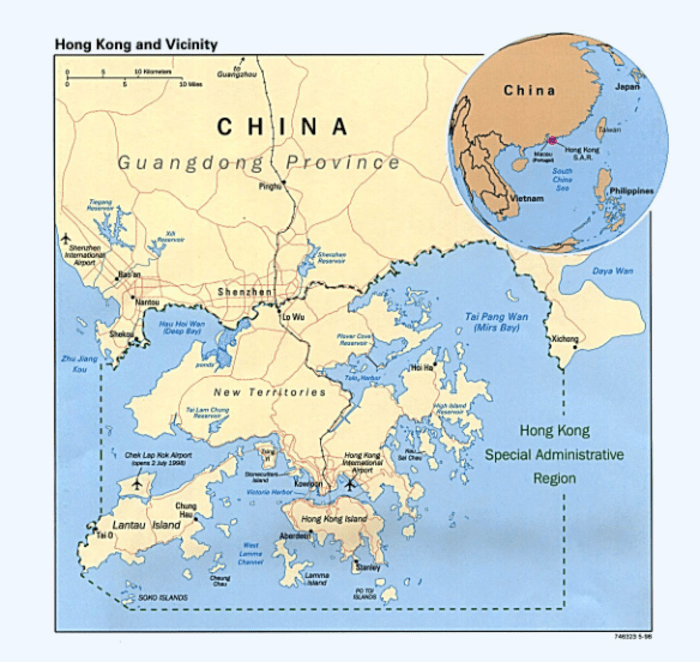
Hong Kong was returned to China on 1 July 1997 and began to be governed by China under a system of one country, two systems, which allowed a high degree of autonomy. This means that there are two systems of governance within the country of China – Hong Kong and China. In contrast to socialist China, Hong Kong, based on capitalism, continued to grow economically. Sharing values with Western countries, Hong Kong has the advantage of being able to bring in talent and capital more easily than socialist China.
In 2014, the Rain Umbrella Movement emerged, led by Zhou Tingying and Huang Zhi Feng, who were high school students at the time. This was due to China changing the system for choosing Hong Kong’s top executive, the Chief Executive, on its own. Those who are elected as Chief Executive are restricted to pro-China and patriotic people only, indicating that in the end, elections are only a formality and can only go as far as Beijing wants them to go. In response, Hong Kong citizens organised demonstrations. This is commonly known as the ‘Umbrella Movement’.
Fugitive Offenders and Mutual Legal Assistance in Criminal Matters Legislation allows suspects who are in Hong Kong because they are believed to have committed crimes abroad to be extradited upon request to a country or territory with which an agreement has been concluded. This could result in people who oppose the Chinese Government being extradited straight to China as a result of a fabricated crime. Hong Kong people, concerned about this, staged a massive demonstration. An estimated two million people took part in the demonstrations. Considering that the total population of Hong Kong is 7.41 million, this means that about 30% of the population took part in the demonstration.
In May 2020, China’s largest decision-making body, the National People’s Congress, enacted the Hong Kong and National Security Maintenance Law. This is a law consisting of 66 articles in total and is a response measure to the anti-Chinese government demonstrations by Hong Kong citizens in 2019, under which demonstrations by Hong Kong citizens are regarded as rebellions against the current system of governance and can be publicly punished under the law. This led to criticism from the UK and other developed countries, as the view that the one country, two systems system was not effectively maintained spread around the world. The Prime Minister of the former sovereign state of the United Kingdom, Boris Johnson, announced a policy to allow three million Hong Kong citizens to apply for British citizenship or permanent residence.
On the identity of Hong Kong people
Hong Kong is a very unique place. Hong Kong is China, but not fully China. It is oriental, but not fully oriental. It is not Western, of course, although some Western institutions and culture remain. Hong Kong is part of South China, which represents southern China, but is also included in the geographical concept of ‘Lingnan’. Lingnan refers to present-day Guangdong Province, Guangxi and Hainan Island, a region with a culture similar to that of Vietnam and a strong image of being ‘outside’ the nuances of Chinese civilisation. This gives Hong Kong a special ‘boundedness’ and creates a unique identity that distinguishes it from China, the UK and surrounding South-East Asian countries.
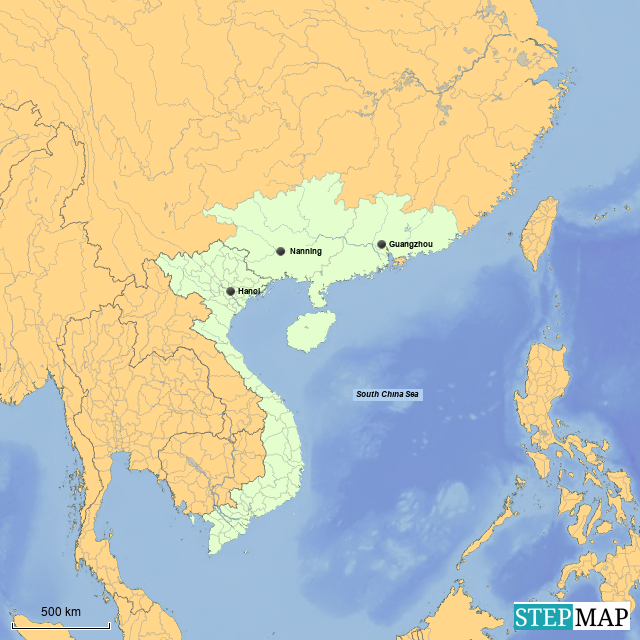
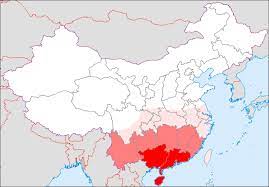
Hong Kong’s population now exceeds 7.4 million, with 92% of the total population being Chinese and the remaining 8% being mainly made up of Filipinos, Indonesians and British. The high proportion of Filipinos and Indonesians is due to the fact that they are employed as maids, known as ‘ama’.
Hong Kong’s population has swelled with every war and turmoil in China. Hong Kong had a dual role as a ‘port of refuge’ to protect ships from typhoons and bad weather, as well as a port of refuge for people fleeing China at any time. The population soared to 100,000 during the Taiping Tianyuan Rebellion of 1851, to 600,000 during the Xinhai Revolution and swelled to 1.6 million when the Sino-Japanese War broke out. The population fell to 600,000 during the Japanese Occupation, but returned to 2 million in 1950 during the National Communist Civil War, and surpassed 4 million in the Great Leap Forward and Cultural Revolution. These huge population movements can be called exodus.
The political boundary between Mainland China and Hong Kong was strengthened in 1949, when the Chinese Communist Party won the civil war and established its government, and this triggered the awareness of ‘Hong Kong people’. In addition, by the 1980s, Hong Kong had achieved an order of magnitude greater affluence than China, with improved education, public housing and a period of rapid economic growth. A new middle class of baby boomers, born and raised in Hong Kong, was created, giving rise to a prototype of ‘Hong Kong people’ consciousness different from that of Mainland Chinese. In Hong Kong, where Cantonese, as opposed to Mandarin in Mainland China, is commonly spoken, the rise of Cantonese films, music and other popular culture, together with the influence of Cantonese-based education, gave rise to Hong Kong’s distinctive identity.

Questions asking respondents whether they were Hong Kongers or Chinese often appeared in opinion polls in 1997 following the return of Hong Kong to China. According to a survey conducted by Dr Mariko Tanigaki of the University of Tokyo, 49.2 per cent said they were Chinese, 38.2 per cent said they were Hong Kong people and 10 per cent said they were both Chinese and Hong Kong people. It was found that 73% of respondents had relatives or friends in Mainland China, and 80% of them socialised with friends or relatives in Mainland China.Since 1997, fears of reversion have disappeared and China’s economic growth has also accelerated Sino-Hong Kong integration and increased Chinese consciousness. However, since 2008, China’s refusal to recognise Hong Kong’s universal suffrage, and a swing of confidence in Beijing, has re-enforced Hong Kong people’s identity: according to a Hong Kong University survey during the 2014 Umbrella Revolution, 75% of Hong Kong youth claimed that they are Hong Kong people, and not Chinese. It found that 75% of the respondents had an identity.
According to a poll conducted by the Hong Kong Institute of Public Opinion in June 2020, 50.5 per cent of people living in Hong Kong identified themselves as ‘Hong Kong people’, 25 per cent as ‘Hong Kong people of China’, 11.0 per cent as ‘Hong Kong Chinese’ and the remaining 12.6 per cent as ‘Chinese’.
The Xi Jinping administration, which was formed in November 2012, has begun to intervene in Hong Kong’s internal politics and clamp down on dissenters. The recent increase in Hong Kong people consciousness is related to the growing reality of the crisis that the political freedom of ‘Hong Kong’, the object of identity belonging, is under threat.
The future of Hong Kong
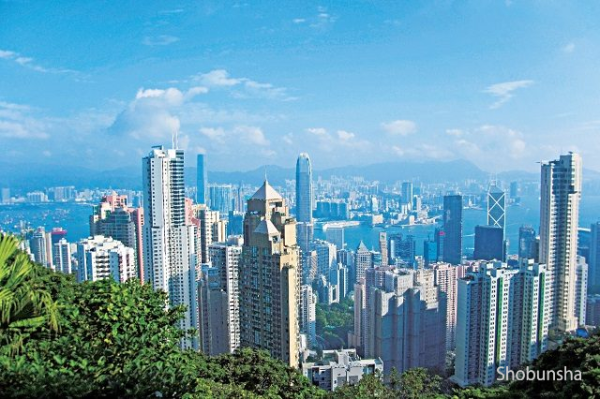
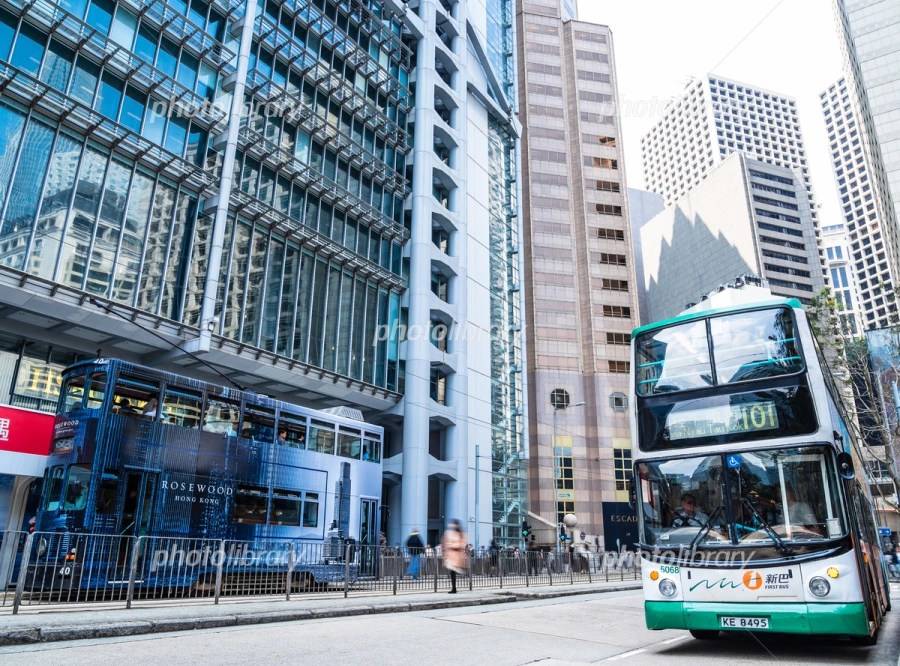
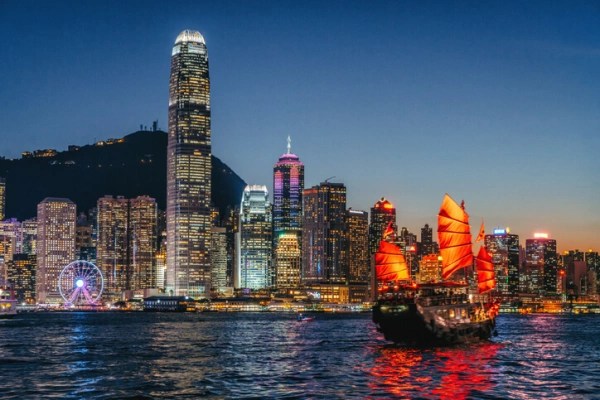
Around the time of Hong Kong’s reversion, Hong Kong earned 20% of China’s total GDP on 0.6% of China’s land. Although Hong Kong had an overwhelmingly high standard of living compared to mainland China, its current GDP contribution is only about 3% of the total. This is due to the economic growth of Mainland China, which has by no means shrunk Hong Kong. The GDP of Shenzhen City, located north of Hong Kong, exceeded Hong Kong’s GDP for the first time in 2018; in 2020, according to China’s Opportunity Cities 2020, published by a think tank, Hong Kong ranks ninth, fourth in terms of economic influence and fifth in terms of ease of doing business. This shows that Hong Kong’s presence in China has declined considerably compared to after the reversion. As an internationally recognised financial city, Hong Kong is still an excellent gateway between China and other countries. However, there are fears that international companies are no longer attracted to Hong Kong due to rising tensions between Chinese students and pandemic control. As a result, the number of international companies with regional headquarters in Hong Kong fell by nearly 10 per cent between 2018 and 2021, while the number of Chinese companies increased by nearly 28 per cent. This suggests that Hong Kong may become less international and more China-oriented than before.
Hong Kong citizens with financial resources now see Hong Kong’s future as bleak and are opting to move abroad. It is estimated that at least 200,000 to 300,000 people have so far migrated to other parts of the world, including the UK and Canada. Many of these people are doctors, teachers and other highly qualified personnel, and the shortage of human resources may become a social problem for Hong Kong in the future. Accordingly, in 2010, the Hong Kong Government established a new visa system for people with an annual income of at least 43 million yen or who have graduated from the world’s top 100 universities, in order to attract professional personnel. In less than two months since it began accepting applications, more than 10,000 people have applied, and the Hong Kong Government has expressed confidence in its ability to secure human resources, but the labour force has decreased by 180,000 over the past three years and the labour shortage is far from being resolved.
Hong Kong has experienced an immigration boom after each of the 1967 Hong Kong riots, the 1989 Tiananmen Square protests and the 1997 handover, and many people who once left Hong Kong because of such problems returned to Hong Kong after confirming its stability from the outside. Thus, it cannot be said that Hong Kong, a city with high population mobility to begin with, will decline due to the outflow of immigrants. However, in this case, if highly educated and highly knowledgeable personnel move abroad with their families, they may never return. It is quite unrealistic to expect Hong Kong, once a thriving financial city, to be able to compete with competitors such as Shanghai and Singapore without people like them and retain its influence as a financial city.
– 野嶋剛, 2020, 「香港とは何か」, ( 2023年8月2日取得, https://www.nippon.com/ja/japan-topics/bg900193/)
– https://news-japan.tokyo/hk-history/
– https://the-owner.jp/archives/11723
– https://gooddo.jp/magazine/peace-justice/terrorism_riot_demonstration/6278/
 toshi blog
コメントを残す