About India
( Location )
It is bordered by the Indian Ocean to the south, the Arabian Sea to the southwest, and the Bay of Bengal. It borders Pakistan to the west, China, Nepal and Bhutan to the northeast, and Bangladesh to the east. Sri Lanka and the Maldives are nearby in the Indian Ocean, and the Andaman and Nicobar Islands have a maritime border with tight Indonesia.
( Population )
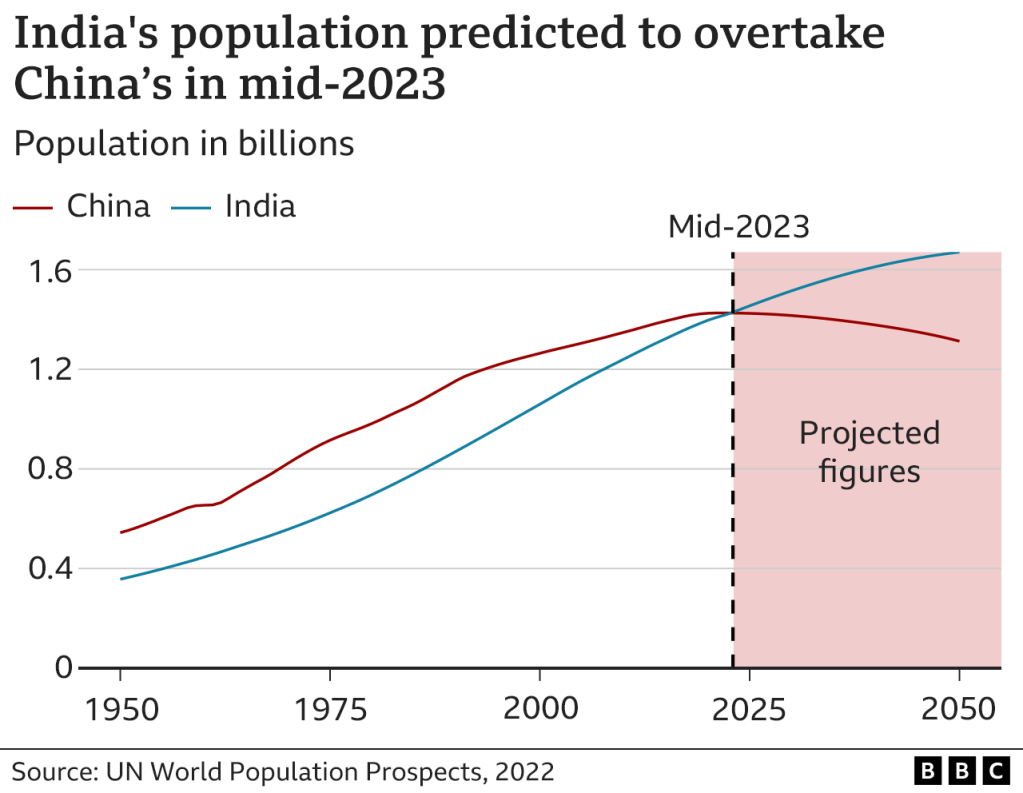
India’s population overtook that of China, the world’s most populous country for many years, by 2023. One of the reasons for the population increase is believed to be a decline in infant mortality due to improved sanitation and other factors. In addition, India’s high economic growth and self-sufficiency in wheat and rice, which are indispensable for making curry and other dishes, are also thought to be behind the increase.
- Current population of India : 1428.6 million
- Current population of China : 1425.7 million
( Topography )
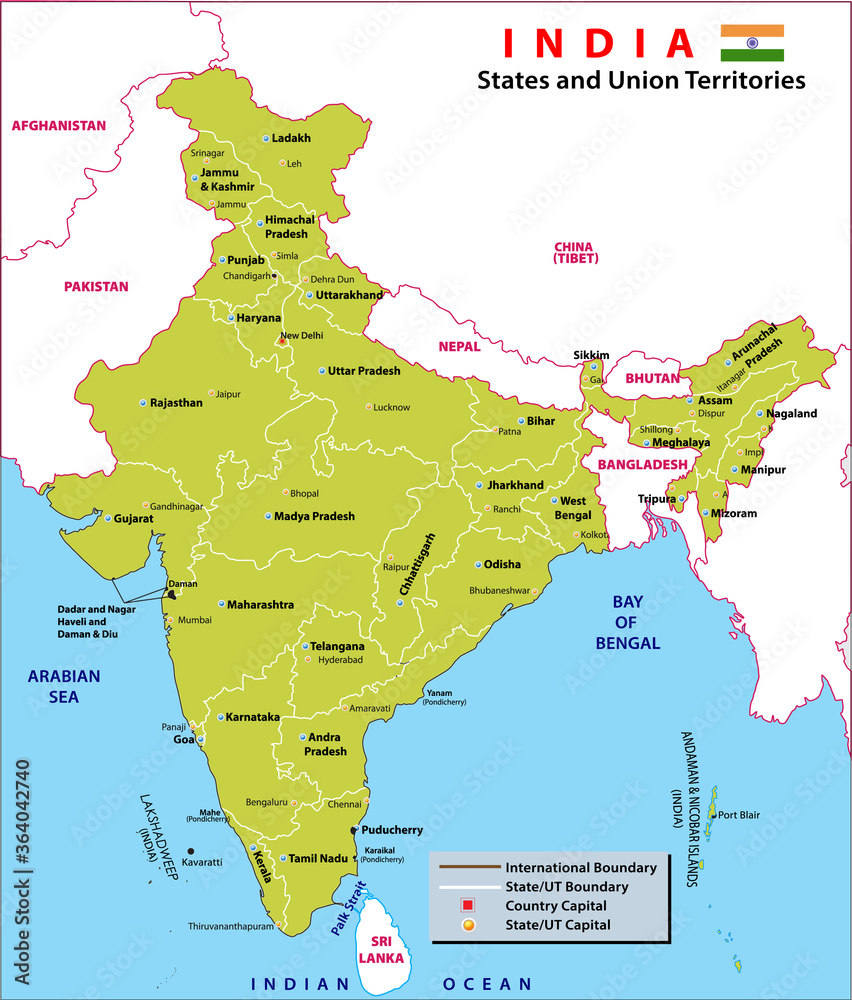
Total land area: 3,287,263 km² (world’s largest 7) 8.8 times that of Japan
North/Central India: Almost the entire area is covered by the fertile Hindustan Plain
South India: Deccan Plateau almost entirely covered by the Deccan Plateau
Western India: rocky sandy tar deserts
Eastern/ Northern India: steep Himalayan Mountains occupy the area
Border Issues with China
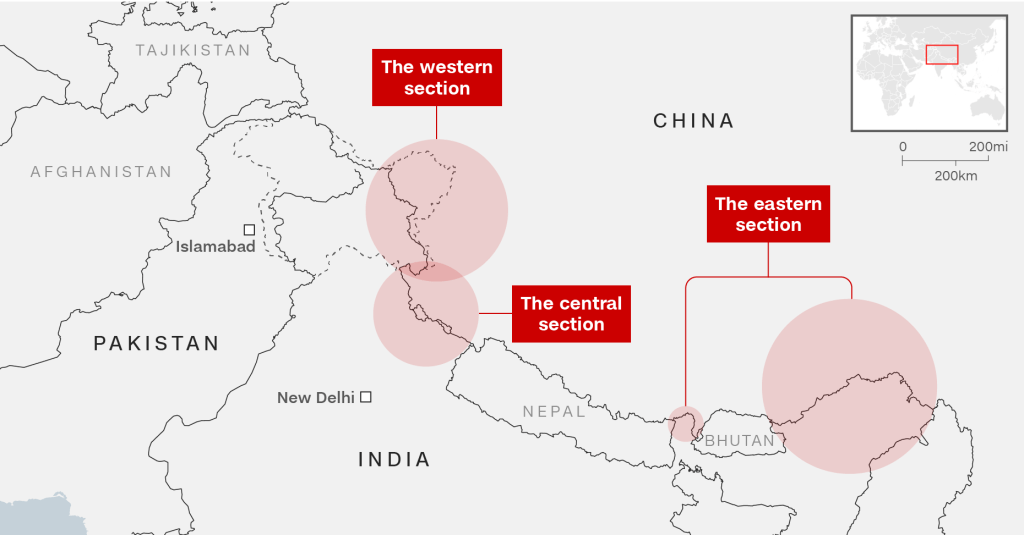
Sino-Indian border dispute: a border dispute in the Himalayan region between China and India.
(List of Border Disputes)
Tibet was merged into China, but in March 1959, a Tibetan uprising broke out in an attempt to gain independence. However, the rebellion was crushed by Chinese troops, and the 14th Dalai Lama went into exile in India. Originally, there were strong ties between India and Tibet, and an armed struggle broke out in August 1959 for the security of Tibet and their own country.
(2) On the unsettled Sino-Indian border, standoffs continued after the two sides clashed in June 2020 in the northern Indian region of Kansimir, killing more than 20 soldiers; another skirmish in January 2009 in the northeastern Indian state of Sikkim resulted in injuries to both sides.
(Kansimir and Sikkim Region Issues)
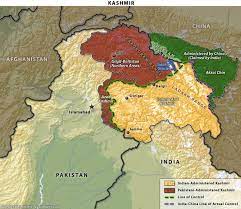
The eastern half of the Kansimir region, across the Line of Control, is controlled by India and the western half by Pakistan. A large part of the Lac region, located on the northeastern edge of Kansimir controlled by India, is occupied by China. The Indian side stated, “The issue of ownership of Kansimir has already been resolved and Kansimir is an indivisible territory of India. Pakistan is illegally occupying a part of it”.
The effective associations in the region are ambiguous, and rivers, lakes, and snow near mountain peaks make it difficult to determine the associations. China and India have held several rounds of talks over the past 30 years, but the border issue has not been resolved. India claims that China has sent thousands of troops into the Galwan Valley and occupies 38,000 square kilometers of Indian territory.
In 2021, armed clashes broke out between Indian and Chinese troops as the Chinese side planned to expand its territory by encroaching into areas under India’s effective control. This resulted in the death of more than 20 soldiers on the Indian side and many more on the Chinese side.
China’s “Belt and Road” Initiative
What is “Belt and Road” initiative
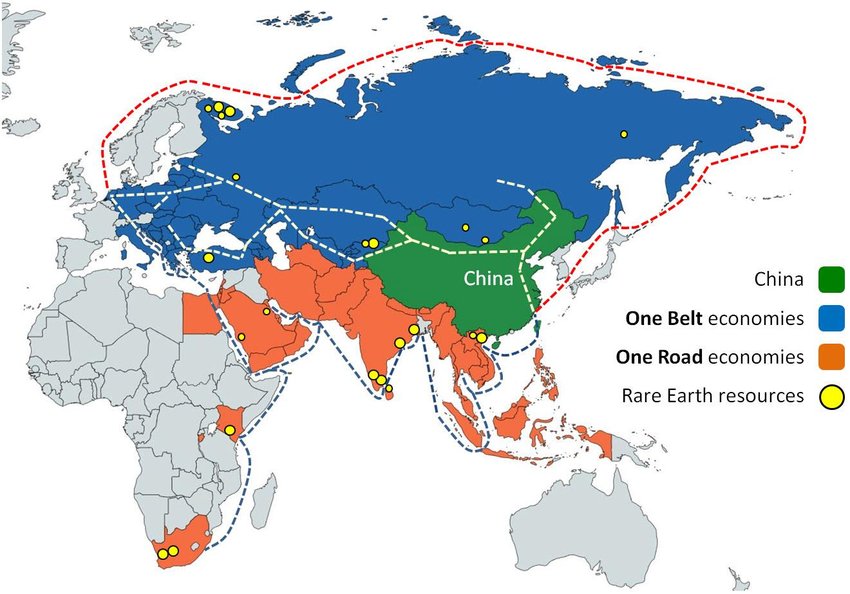
This is the general name for the concept, plan, and promotion of a broad economic zone between China and Central Asia, the Middle East, Europe, and Africa, which the People’s Republic of China has continued to promote since 2017. It began when General Secretary Xi Jinping proposed the construction of the “Silk Road Economic Belt” in a speech at Nazarbayev University in Kazakhstan on September 7, 2013, and was often proposed by General Secretary Zhou at APEC in Beijing, China on November 10, 2014.
( Concerns )
In some cases, China’s geopolitical and military objectives are of its own volition and threaten the security of neighboring countries.
① Port of Gwadar ( Pakistan )
In October 2001, China prepared a master plan, stating that three multipurpose berths would be constructed in the first phase. Of the total construction cost of $248 million, China contributed $198 million, and China Harbor Construction Co. was in charge of the construction work. The first vessels entered the port in March 2008, although the completion of the project was delayed much later than March 2005 due to construction delays.
Karachi, the largest commercial city, is about 600 km away from Gwadar, and only one road connects the two cities. From here, goods are transported by rail or truck, but it is clear that it is more convenient and faster to use the well-maintained port of Karachi. China must have known this from the beginning, but still insisting on Gwadar is still grounds for suspicion that it intends to use it as a military port.
Pakistan has built much of its infrastructure with Chinese loans. Excluding the construction of a new airport in Gwadar, which is a grant aid, the cost of one section of the highway construction project between Peshawar and Karachi, mentioned above, is about $2.9 billion, but the financial source is an interest-free loan from China. The Pakistani government will eventually have to reimburse the loan, but the government’s finances continue to be in a critical situation, and it may not be able to reimburse the loan as expected. This has increased China’s influence in Pakistan in terms of finances. As China’s influence grows, more and more countries will not be able to complain or express their opinions about so-called China.
② Port of Hanbantota
Sri Lanka is smaller than Hokkaido, Japan, and is home to approximately 22.16 million people. Sri Lanka is also located on the sea lanes of the Indian Ocean. 2008 saw the start of the first major phase of construction for the new terminal, with a total cost of approximately $360 million, 85% of which was borne by the Export-Import Bank of China and the remaining 15% by the Association of Sri Lankan Ports and Harbours Authority (ALPA). China Port Engineering, a major construction company with the participation of China Jiao Tong Construction, was the contractor. The construction was a Chinese initiative.
Hambantota Port fell into a debt trap when revenues did not rise as expected. The Sri Lankan government could not see any way to repay the debt, so it reached an agreement with China Merchants Port Authority (CMport) to establish two joint ventures, SLPA and CMport, called “Hambantota International Port Services,” and the right to operate Hambantota Port was transferred to both companies for 99 years. However, with 85% of the investment held by CMport and the remaining 15% by SLPA, China has almost completely taken control of this port in terms of operations.
Even with foreign government cooperation and corporate loans, without a realistic repayment plan, the port would be caught in a “debt trap. The Hambantota port has become a perfect example of this.
(India’s position)
India is concerned about the rapidly growing Chinese influence in South Asian countries such as Sri Lanka, Nepal, and Bhutan, which are India’s neighbors.
India considers all of Kansimir as its territory based on the 1947 offer by the then King of Jammu and Kangshimir to belong to India. Therefore, both AJK ( Azad Jammu and Kansimir ) and GB ( Gilgit-Baltistan ) are recognized as its own territory and are illegally occupied by Pakistan.
The CPEC (China-Pakistan Economic Circuit) passes through GB, which is supposed to be its own territory, which means that Pakistan is developing it on its own. India is not positive about the One Belt, One Road initiative because of the strong perception that its own territory is threatened by it.
Chinatown in Culcatta
As one of the largest settlements of 18th century Chinese immigrants in India, Chinatown is a delightful place to visit. Located in the east of the city near the Tangra and Territa Bazaar areas, Chinatown is a bustling area. Eighty percent of all Chinese are from Guangdong Province, with 9% from Hubei Province, 8% from Shandong Province, and 3% from other provinces. It is believed that the Opium War, the Taiping Rebellion, the Sino-Japanese War, and the Yihe Dan Incident caused many Chinese to migrate to India.

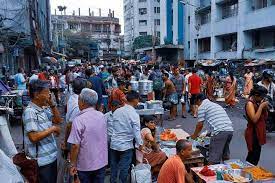

Although it has recently become smaller in size, the Chinese morning market is still open every day. This Chinese market sells Chinese breakfast, foodstuffs, and snacks every day between 7:00 and 8:30 a.m. There are also fruits, vegetables, meat, and fish available for purchase at lower prices than in other stores, in addition to non-Chinese items. Due to the decrease in the number of Chinese, it seems that more and more stores are hiring local Indian staff, even if many store owners are Chinese.
Reference :
– 笠井亮平, 2023, 「第三の大国 インドの思考」, (2023年8月10日取得, https://books.bunshun.jp/ud/book/num/1666140100000000000J
– http://kopilychee.info/?p=4257
– https://www.jstage.jst.go.jp/article/jags/2/1/2_32/_pdf
– https://kimcafetr.exblog.jp/26630049/
 toshi blog
コメントを残す